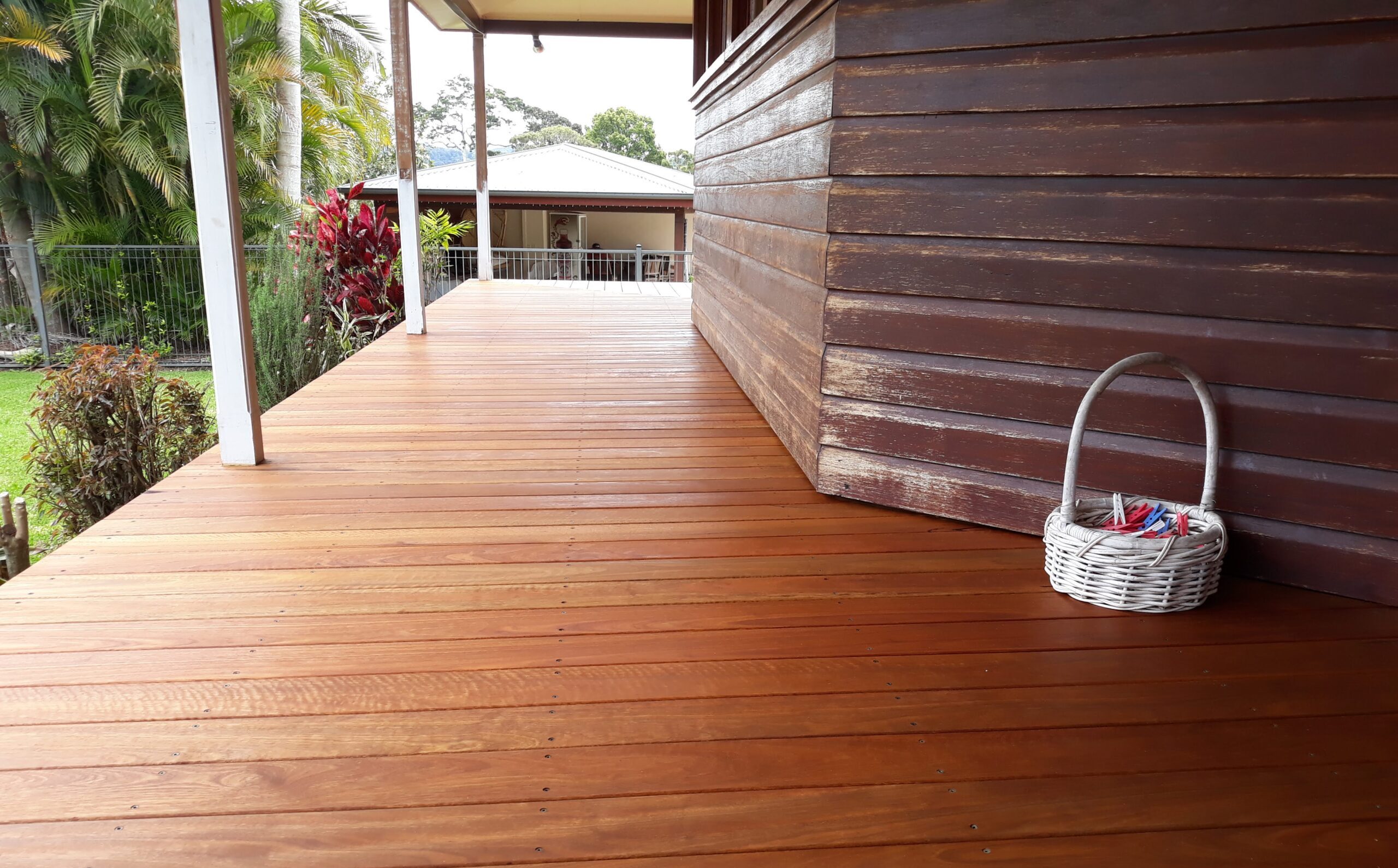
Choosing the right coating finish is critical to the long-term performance, appearance and safety of Australian hardwood decking. External timber is continuously exposed to moisture, UV radiation and temperature fluctuations, all of which influence how the timber moves, weathers and performs over time.
An appropriate coating system not only enhances the natural grain and character of hardwoods, but also provides essential protection against water ingress, surface wear and slip hazards. Selecting a finish that responds effectively to Australia’s harsh outdoor conditions can significantly reduce maintenance demands, minimise coating failure and extend the service life of the deck.
Preparation
Proper preparation is crucial for a long-lasting finish. Start by thoroughly cleaning the deck to remove dirt, metal shavings, mould, and tannins and use a deck cleaner for stubborn stains if required. Sand any rough or weathered areas and allow the timber to dry out completely before applying a finish.
Maintenance
Regular maintenance will keep your deck looking its best. Reapply selected coatings every 6 to 12 months, or as recommended by the product manufacturer. Sweep away leaves and debris and wash the surface occasionally to prevent mould growth. Inspect for signs of wear or damage, addressing any issues promptly to prevent further deterioration.
Slip Resistance
Slip resistance is an important safety consideration, especially in wet conditions. Many decking finishes are tested to meet Australian Standards for slip resistance. If additional grip is required, anti-slip treatments or tapes can be applied to high-traffic areas.
When it comes to protecting and enhancing Australian hardwood decking, there are several finishes available, some of which are categorised as:
- Penetrating Oils: These are popular for hardwood decks as they soak into the timber, highlighting the natural grain and providing water resistance. Common options include decking oils and natural tung oils.
- Water-Based Sealers: These finishes form a surface film, offering UV protection and a range of sheen levels. They tend to dry faster and are low odour, making them a practical choice for residential settings.
- Polyurethane and Varnish: While less common for outdoor decks due to their tendency to crack and peel under harsh weather, they provide a hard, glossy finish when used in covered areas.
Film-Forming Coating Systems
Film‑forming coating systems, such as varnishes, polyurethanes and some surface sealers, create a continuous layer over the timber rather than penetrating it. While these systems can offer a uniform appearance and higher initial gloss, they present several challenges when used on external timber decking:
- Peeling and Delamination
External timber is subject to moisture movement due to rain, humidity and temperature changes. Film‑forming coatings can trap moisture beneath the surface, leading to loss of adhesion, blistering and peeling. Once the coating is breached, failure can spread rapidly across the deck surface. - Cracking Due to Timber Movement
Timber expands and contracts with changes in moisture content. Rigid film‑forming coatings are often unable to accommodate this natural movement, resulting in cracking and splitting of the coating, particularly at board joints, fixings and end grain. - High Maintenance and Difficult Repairs
When film‑forming systems fail, localised touch‑ups are rarely effective. Remedial work typically requires complete sanding or stripping back to bare timber before recoating, which is labour‑intensive, disruptive and costly compared to re‑oiling penetrating systems. - Slip Resistance Issues
Smooth film‑forming finishes can become slippery when wet.This can present safety risks on decks, stairs and walkways unless additional slip‑resistant additives or treatments are applied, which may alter appearance and performance. - Accelerated Degradation in Harsh Exposure
UV radiation, heat and weathering can cause surface coatings to become brittle and degrade over time. In exposed external environments, this can lead to chalking, loss of clarity and uneven appearance, reducing both durability and aesthetic performance. - Moisture Entrapment and Timber Degradation
By sealing the surface, film‑forming coatings may restrict the timber’s ability to dry evenly. Prolonged moisture retention can increase the risk of mould growth, surface staining and long‑term timber deterioration.
For these reasons, film‑forming coating systems are generally less suitable for exposed external decking applications. Penetrating oil‑based finishes are typically preferred for external hardwood decking due to their ability to move with the timber, ease of maintenance and lower risk of coating failure.
By selecting the right finish and following proper preparation and maintenance routines, you can ensure your Australian hardwood decking remains attractive, durable and safe for years to come.